

Florida’s Unique Position in U.S. Clinical Research
A Diverse Population That Reflects the Nation
Diversity in patient populations is an important consideration in clinical research. Pharmaceutical companies and research sponsors need study participants who reflect the actual range of people their treatments will eventually serve — different ages, ethnicities, health histories, and geographic backgrounds. Florida has a large and diverse population that supports clinical research enrollment. The state is home to more than 22 million people spanning a wide range of demographics, from large retiree communities to young families, from urban centers like Tampa and Miami to rural communities throughout the state. This diversity makes Florida a strong location for conducting research that produces results applicable to broad populations. For clinical research sponsors, that kind of access is highly useful — and it’s a major reason why Florida consistently ranks among the top states for active clinical trial sites.
Florida’s Aging Population Creates Real Medical Urgency
Florida has one of the oldest median populations in the United States, and that matters for clinical research in a specific way. Many of the conditions most in need of new treatments — including autoimmune diseases, cardiovascular disease, arthritis, and COPD — disproportionately affect older adults. When research sponsors are looking for participants with conditions like rheumatoid arthritis, lupus, osteoarthritis, or elevated cholesterol, Florida’s population provides a larger pool of individuals who may be eligible for clinical trials. That concentration of medical need creates the demand that supports robust, ongoing research programs throughout the state.
A Strong Infrastructure for Medical Innovation
Florida isn’t just home to patients — it’s also home to a well-developed network of hospitals, academic medical centers, and independent research sites that support important clinical research. In the Tampa Bay area alone, institutions like the University of South Florida, Tampa General Hospital, and Moffitt Cancer Center have helped establish the region as a recognized center of medical innovation. According to the Tampa Medical & Research District, partner institutions in the Tampa Bay area have been involved in nearly 8,600 clinical trials conducted in Florida since 2019 — a staggering number that reflects the region’s ongoing participation in clinical research. Independent research organizations like Clinical Research of West Florida (CRWF) play an important role in this ecosystem, bringing Phase I through Phase V trials to community-based settings where patients can participate without the barriers of large academic hospital systems.
Why Tampa Bay Specifically?
Geographic and Demographic Advantages
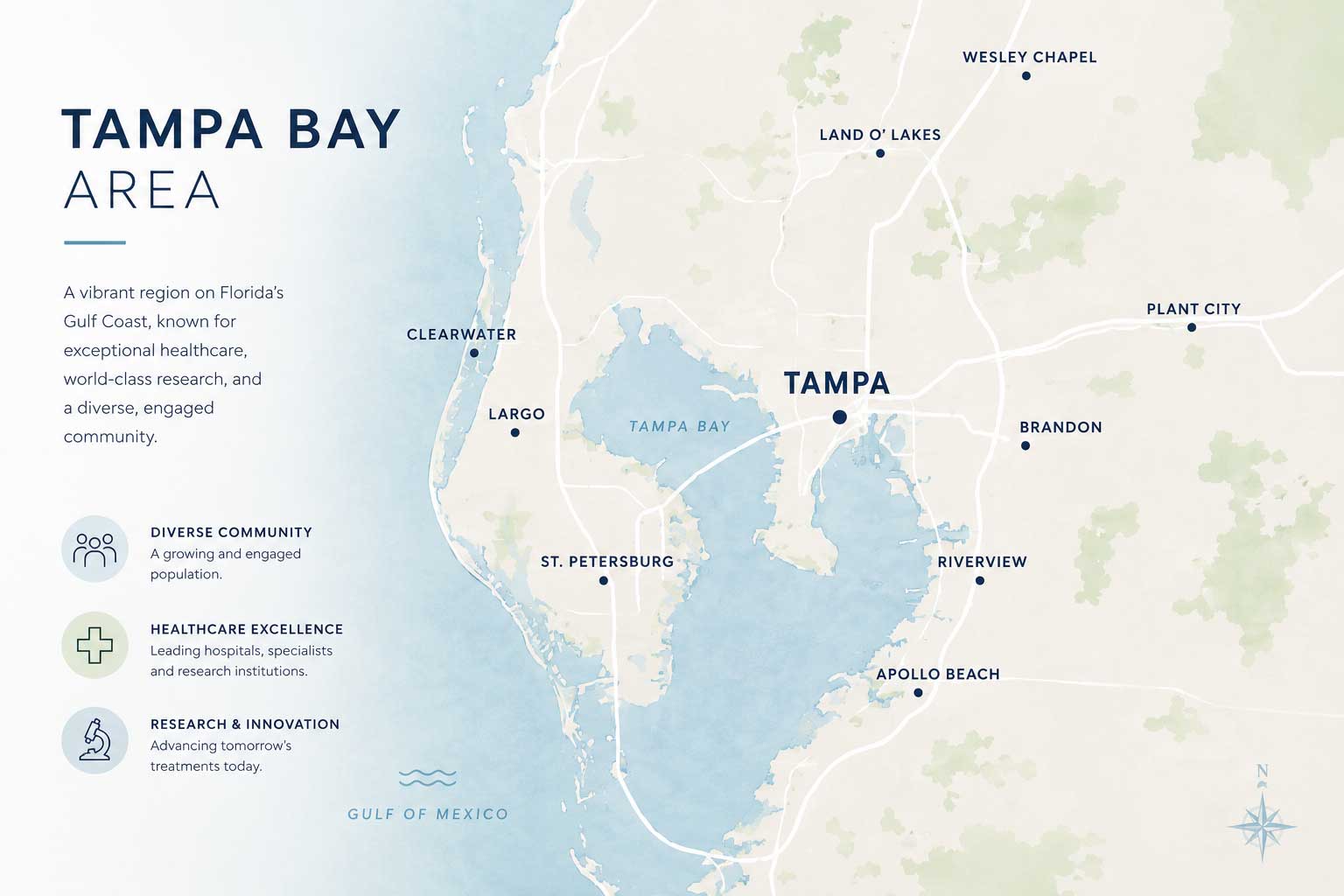
The Tampa Bay metro area — which includes Tampa, St. Petersburg, and Clearwater — is home to over 3 million residents, making it one of the largest and most diverse population centers in the southeastern United States. That population base, combined with the region’s infrastructure and climate, has made Tampa Bay an active area for clinical research activity. The area’s accessibility also matters. With two major airports, a robust highway network, and communities spread across Hillsborough and Pinellas counties, reaching a research site in Tampa or Clearwater is practical for patients from a wide geographic area.
A Track Record That Attracts Top-Tier Research
Research sponsors carefully select where to conduct their studies. They look for sites with experienced investigators, strong patient recruitment histories, and a track record of protocol compliance and data quality. Tampa Bay research centers that have built those track records over decades consistently attract new and more complex studies, which in turn means patients in the region have access to treatments and trials they simply wouldn’t find in other markets. Clinical Research of West Florida has operated in the Tampa Bay area since 1995, conducting more than 1,500 clinical trials across a range of conditions. That depth of experience is exactly what research sponsors look for — and it’s why CRWF continues to be selected for both early-phase studies and later-stage trials across conditions including lupus, rheumatoid arthritis, COPD, asthma, eczema, cardiovascular disease, and more.
What This Means If You’re a Patient in Tampa or Clearwater
Access to Tomorrow’s Treatments — Today

The most direct benefit for patients living in the Tampa Bay area is access. When a promising new therapy is in clinical development, the patients who can participate are the ones closest to the research sites running the study. Being in one of the most active clinical research regions in the country means you’re far more likely to have options — especially if you’re managing a chronic condition that isn’t fully controlled by current treatments. For someone living with lupus, rheumatoid arthritis, or COPD, the chance to try a treatment that isn’t yet commercially available — under the supervision of experienced physicians — may be meaningful for some patients.
Study-Related Costs and Compensation
Some people may have concerns that clinical trials are expensive or experimental. In fact, participants in most clinical trials receive all study-related medical care, exams, and medications at no cost. Many studies also offer compensation for participants’ time and travel. At CRWF, all enrolled participants receive oversight and care from a qualified clinical team at no charge for trial-related visits and procedures. This is particularly valuable in a region where many residents are managing health conditions in various financial or insurance situations.
Local Sites, Convenient Locations
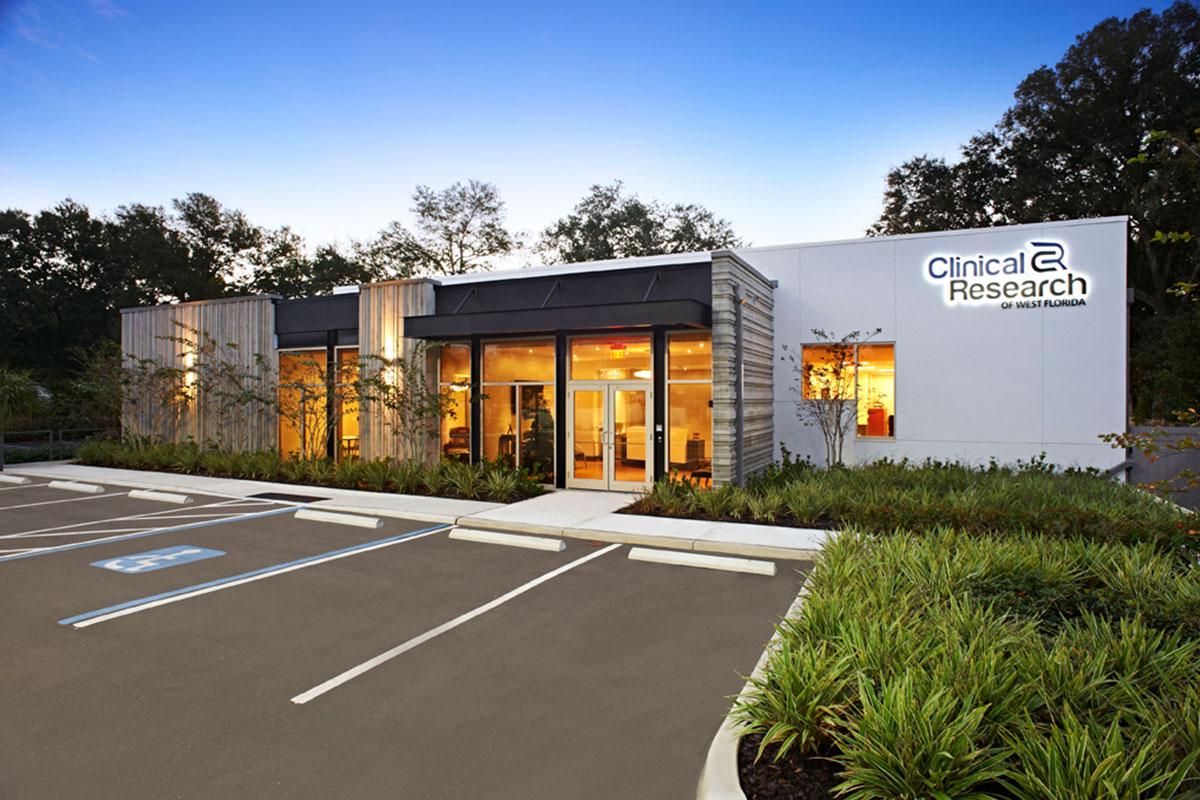
One reason patients in other parts of the country miss out on clinical trials is distance. Driving two hours each way for a monthly study visit becomes a barrier that leads people to drop out or never enroll in the first place. Tampa Bay patients don’t face that obstacle to the same degree. CRWF operates two convenient locations — one in Clearwater and one in Tampa — making it realistic for residents across the region to participate without disrupting their daily routines.
Is Florida’s Clinical Research Scene Growing?
The short answer is yes. The demand for clinical trial sites in Florida continues to grow, driven by an aging population, increased pharmaceutical investment in complex conditions like autoimmune diseases and cardiovascular disorders, and a post-pandemic push to accelerate drug development timelines. For patients, that growth is good news. More studies mean more opportunities to access new treatments, and more competition among research sites for participants means that patient experience and care standards continue to improve.
How to Find Out If You Qualify
If you’ve been curious about clinical trials but weren’t sure where to start, geography is no longer your obstacle — especially in the Tampa Bay area. CRWF currently has enrolling studies across more than a dozen conditions, including rheumatoid arthritis, lupus, eczema, COPD, asthma, psoriatic arthritis, cardiovascular disease, and gout. The process begins with a simple eligibility screening — a conversation about your symptoms, health history, and current medications — to see whether any open studies might be a fit. There is no cost to learn more, and participation is entirely voluntary. It’s simply a conversation that could open a door.
Florida is One of the Nation’s Top Clinical Research Hubs
Florida’s role as a clinical research hub isn’t a coincidence. It’s the result of a large, diverse, and medically complex population; strong academic and community research infrastructure; and decades of accumulated expertise at sites like Clinical Research of West Florida. For patients in Tampa and Clearwater, that means something practical: you have access to clinical research opportunities that may not be available in all regions. Whether you’re looking for new treatment options, want to contribute to medical science, or both — the opportunity is closer than you might think. Learn more about currently enrolling studies at CRWF →